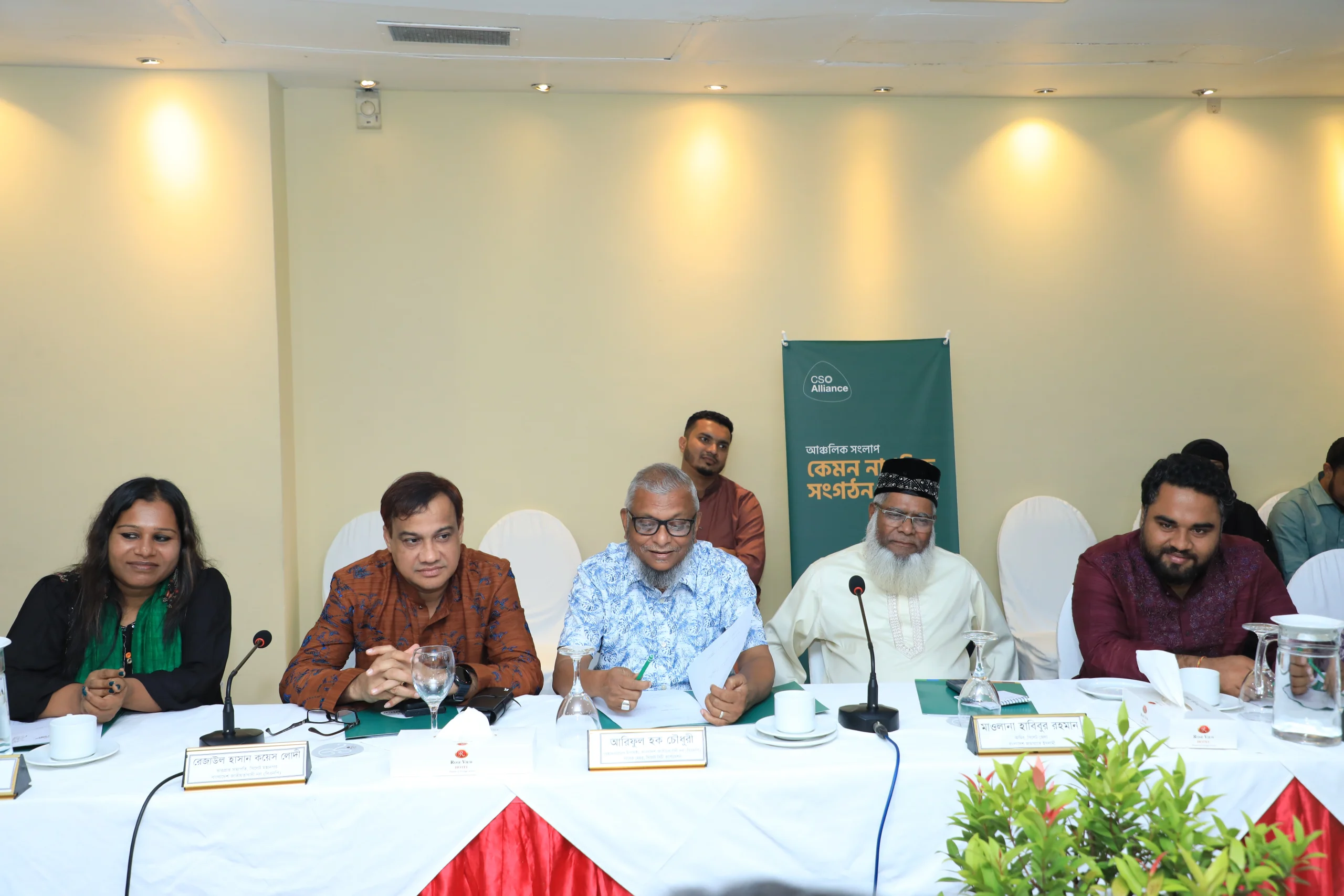
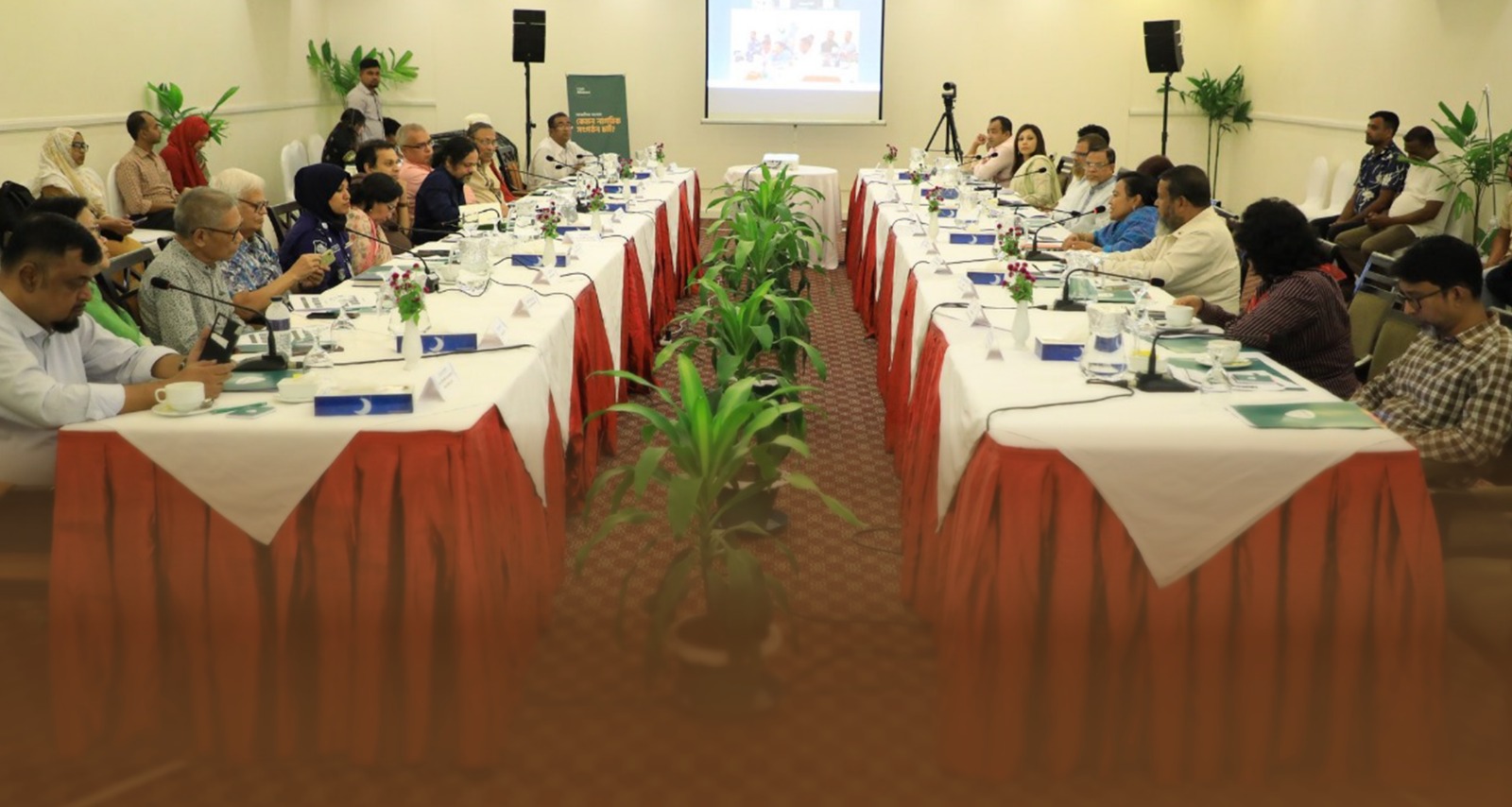
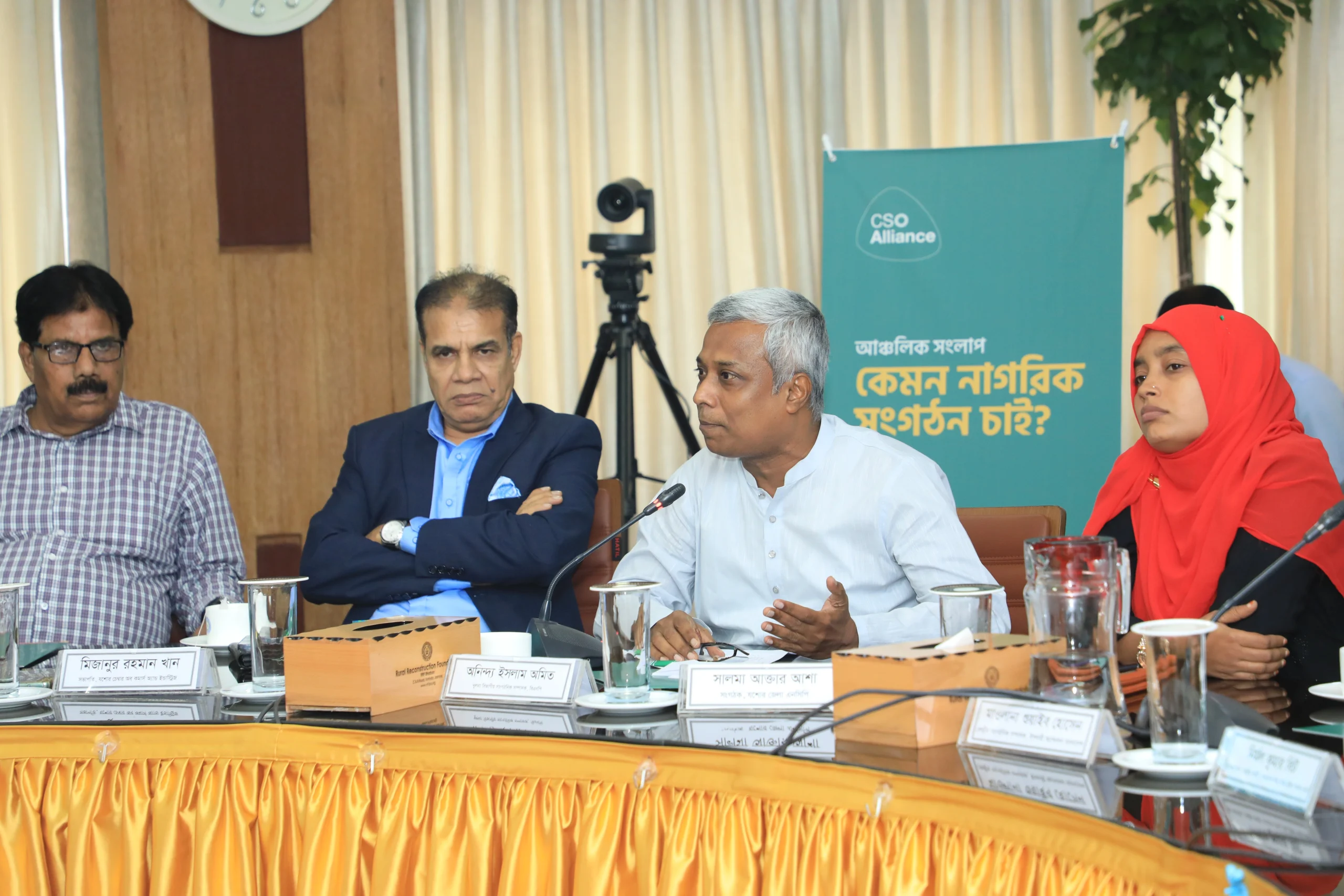
The CSO Alliance, in collaboration with the Institute of Development Affairs (IDEA), held its third regional consultation in Sylhet on 21 July 2025, titled “What Kind of Civic Organization Do We Want?”. The meeting brought together a wide range of participants to discuss how civic organizations can become more transparent, accountable, and closely connected to public needs. Speakers emphasized that while civil society in Bangladesh has long contributed to areas such as education, health, agriculture, human rights, and poverty reduction, the changing political, economic, and social landscape requires a renewed focus on inclusivity, grassroots impact, and citizen trust.
The focus on financial self-reliance was echoed in Sylhet, with participants urging NGOs to reduce their dependence on foreign aid and seek more sustainable sources of funding. This included exploring social enterprises and community contributions as alternatives. The issue of microfinance, in particular, received strong criticism, with many arguing that it has become a profit-driven venture rather than a tool for social empowerment. Reforming microcredit programs to make them more beneficiary-friendly and sustainable was a key recommendation.
The inclusion of youth and marginalized communities was a prominent theme. Noting that many young people feel excluded from conventional political processes, participants highlighted the importance of creating space for youth in decision-making. Moreover, the consultation underscored the need to address women’s safety and empower gender-diverse communities, ensuring that these groups have a seat at the table when decisions are made.
The consultation was attended by political leaders, academicians, government officials, private sector representatives, youth, and civil society members. Key political figures included Ariful Haque Chowdhury, Advisor to the BNP Chairperson and former Mayor of Sylhet City Corporation; Mohammad Fakhrul Islam, Ameer of Sylhet Metropolitan Jamaat-e-Islami; Rezaul Hasan Kayes Lodi, Acting President and former Panel Mayor of Sylhet City Corporation; and Maulana Habibur Rahman, Ameer of Sylhet District Jamaat-e-Islami. Academic representation included Professor Dr. A.M. Sarwaruddin Chowdhury, Honorable Vice Chancellor; Dr. Tahmina Islam, Professor; and Professor Dr. Md. Sajedul Karim, Honorable Pro-Vice Chancellor. Government officials present were Khan Md. Reza-un-Nabi, Divisional Commissioner, and Mohammad Sher Mahbub Murad, Deputy Commissioner and District Magistrate. The private sector was represented by Shribas Mahali, former Valley Head; Mrs. Jesmin Sultana, President of Sylhet Women Chamber of Commerce & Industries; and Fayeze Hasan Ferdous, President of Sylhet Chamber of Commerce & Industries. Civil society members included Dr. Shabbir, Syeda Shirin Akter, Emad Ullah Shahidul Islam Shahin, Moin Uddin, Ikramul Kabir, Mrityunjoy Bhola, Nong Poklai Sinha, Faruk Mahmud Chowdhury, and Sihab Uddin, alongside youth leaders.
In closing, the CSO Alliance thanked participants for their constructive contributions and reaffirmed its commitment to integrating the consultation’s insights into a concrete action plan. The Alliance emphasized that the vision emerging from Sylhet is clear: civic organizations must be inclusive, transparent, accountable, and deeply connected to the everyday realities of citizens. Conveners urged all stakeholders to remain engaged in strengthening civil society, expressing confidence that the ideas shared in Sylhet will help shape a more responsive, people-centred model of civic action across Bangladesh.